
Retrofitting existing buildings is one of the most effective ways to reduce carbon emissions in the built environment. While new developments play an important role in meeting Net Zero targets, it is the existing building stock that represents the greatest opportunity for meaningful whole life carbon reduction.
Across the UK, many buildings no longer meet expectations for energy performance, comfort, or resilience. Retrofit improves, extends, and future-proofs these assets, cutting carbon while protecting long-term value.
Why Whole Life Carbon Matters in Retrofit
When planning retrofit works, it is easy to focus solely on operational energy savings. However, carbon reduction cannot be achieved through energy efficiency alone.
Whole life carbon considers:
- Emissions from materials and construction activities
- Operational emissions over the building’s life
- Maintenance, repair, and replacement impacts
- End-of-life outcomes
In retrofit projects, embodied carbon from new materials and interventions can be significant. A whole life carbon approach ensures that operational carbon savings are not undermined by unnecessary upfront emissions.
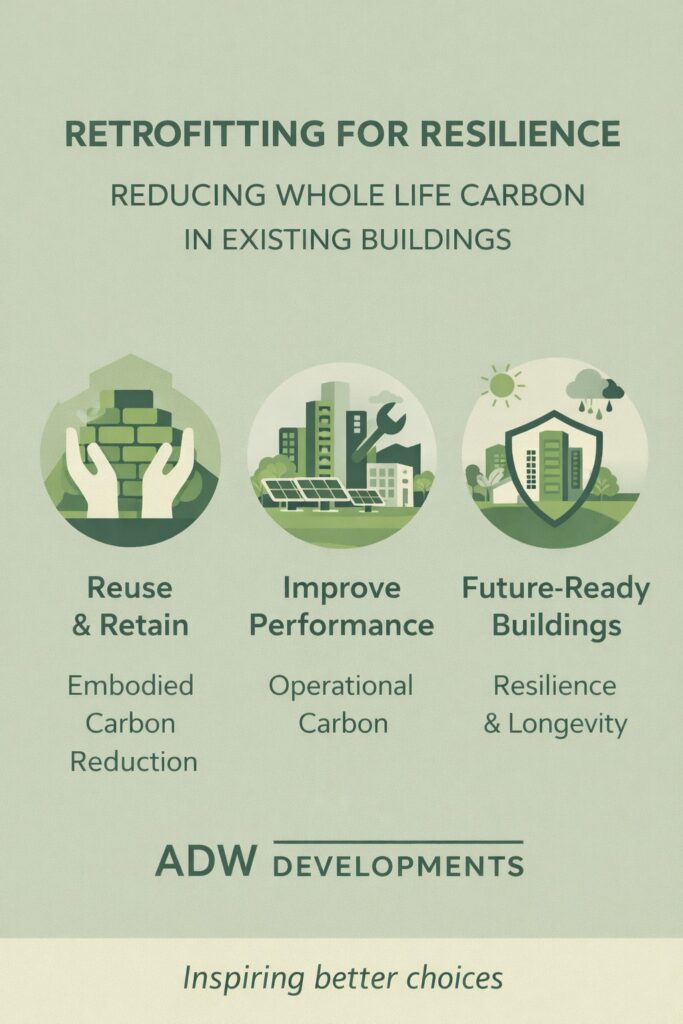
A Smarter Approach to Retrofit
Effective retrofit is not about replacing everything. It is about making informed, targeted interventions that improve performance without creating new risks or inefficiencies.
Start with the building fabric
Upgrading insulation, airtightness, and glazing can significantly reduce heat loss, but teams must design these measures carefully. Designers need to consider moisture movement, ventilation, and thermal bridges to prevent condensation, overheating, and long-term fabric damage.
Improve building services
Older systems often operate well below modern efficiency standards. Retrofit provides an opportunity to:
- Introduce low-carbon heating solutions
- Improve controls and zoning
- Reduce energy demand through smarter ventilation and lighting
These upgrades can deliver substantial operational carbon reductions while improving comfort and usability.
Prioritise material efficiency
Reusing existing structural elements, retaining finishes where possible, and selecting low-carbon materials for replacements all contribute to lower embodied carbon. Retrofitting should focus on retaining value, not discarding it.
Assessing Whole Life Carbon in Existing Buildings
Whole life carbon assessment plays a crucial role in retrofit decision-making. It allows project teams to:
- Establish a baseline for the existing building
- Compare retrofit options and intervention scenarios
- Identify carbon-intensive elements and opportunities for reduction
- Support planning, funding, and certification requirements
Unlike new build assessments, retrofit modelling must account for existing materials, building conditions, and performance interactions. This makes early, well-structured assessment essential.
Retrofitting for Long-Term Resilience
Carbon reduction depends on resilience. Buildings designed to remain comfortable and adaptable over time avoid unnecessary intervention and the emissions that come with it.
Retrofit strategies should therefore consider:
- Overheating risk and passive cooling opportunities
- Moisture management and long-term durability
- Future adaptability and ease of maintenance
Designing for resilience ensures that carbon savings are maintained throughout the building’s life, not just at completion.
The Business Case for Retrofit
The case for retrofit continues to strengthen. Rising energy costs, evolving regulation and increased investor scrutiny are driving demand for demonstrable performance improvement in existing assets.
Well-planned retrofit can:
- Reduce operational costs
- Improve EPC ratings and compliance
- Enhance asset value and marketability
- Support net zero and ESG commitments
A whole life carbon approach ensures these benefits are delivered efficiently and credibly.
FAQs
What is whole life carbon in retrofit projects?
Whole life carbon considers all emissions associated with a building over its entire lifespan. In retrofit projects, this includes the embodied carbon of new materials and works, operational energy use, maintenance, and eventual end-of-life impacts.
Why is retrofitting important for reducing carbon emissions?
Most carbon associated with the built environment already exists within the current building stock. Retrofitting allows buildings to be improved and extended rather than demolished and rebuilt, significantly reducing embodied carbon while improving operational performance.
Does retrofit always reduce carbon?
Not automatically. Poorly planned retrofit can introduce high embodied carbon or performance risks. A whole life carbon assessment helps ensure that interventions deliver genuine, long-term carbon savings.
How does retrofit improve building resilience?
Retrofit can enhance resilience by improving thermal comfort, reducing the risk of overheating, managing moisture more effectively, and upgrading systems to cope with future climate conditions.
When should whole life carbon be assessed in a retrofit project?
As early as possible. Early-stage assessment allows teams to compare options, avoid unnecessary interventions, and optimise carbon savings before design decisions are fixed.
How ADW Developments Can Help
At ADW Developments, we support retrofit projects by providing clear, evidence-based advice that helps clients make informed decisions. Please check the services we provide here.
We believe in inspiring better choices and helping clients reduce carbon, manage risk, and deliver resilient buildings that perform over the long term.