

Knowledge Share
Discover the latest news, publications, and insights from ADW Developments.

Overheating Is a Whole Life Cost Decision
Overheating is usually discussed as a compliance question. Since 2021, Approved Document O has set requirements for limiting overheating risk in new residential buildings in England, and most teams treat it as a box to clear before planning. That framing overlooks the...

World Architecture Day: The Architect’s Hand in Whole Life Carbon
On Monday 5 October, the International Union of Architects marks World Architecture Day. The theme this year is Housing is a Human Right. Build It. It calls on architects to engage beyond design practice, into questions of housing policy, affordability and equitable...

Man 02: Why Life Cycle Costing Credits Are Won at Stage 2
Man 02 is one of the more straightforward credits in BREEAM to achieve. It is also one of the most frequently missed. The requirements are clear, the methodology is well established, and the evidence is not onerous. Project teams lose these credits regularly, and...

The Standards Are Changing. What BS 8544 and ISO 15686 Mean for 2027
BS 8544 and the ISO 15686 series are familiar tools for life cycle costing and durability. Teams use them on projects every week. Both are now being rewritten, and the changes are substantial. They are likely to influence good practice from 2027 onwards. If you are...

Why Two Carbon Assessments of the Same Building Can Disagree
Two competent consultants assess the same building. They work from the same drawings and the same specification. Yet their whole life carbon figures come out different, sometimes by a margin that surprises the client. This is not a sign that one of them is wrong. It...

Make Your Important Decisions Early: Where Value Is Really Created
Ask a project team when the important decisions get made, and many will point to the moments that feel decisive: the tender, the contract, the start on site. Yet by then, the decisions that matter most have usually already happened. The choices that shape a building's...

The Judgement Beneath the Numbers: In Conversation With Harish Borah, Expert in Life Cycle Thinking (Cost & Carbon), ADW Developments
We continue our series of interviews with the ADW team, which we opened with our Director, Anthony Waterman. This time, we sit down with Harish Borah. Construction can calculate some things. Others, it must judge. Harish has spent over a decade working where the two...

Durability by Design: Why Service Life Planning Protects Your Budget
A building's cost does not stop at practical completion. It continues for decades, in the form of repairs, replacements, and maintenance that most project teams never model at the design stage. Durability determines the size of that ongoing bill. A scheme designed...

BREEAM Hea 08 Security: Why the Assessor Cannot Be Your Design Team
Security is worth a single credit in BREEAM, so it is easy to treat as an afterthought. That is exactly how it catches people out. Teams lose this credit often, and they lose it expensively, because they almost always underestimate two of its requirements. The first...

BREEAM Refurbishment and Fit Out V7: What Is Changing, and How to Prepare
This July, BREEAM published the technical standards for RFO V7. The manuals are out, but registrations have not yet opened, and BRE expects them later in the summer. For now, no project can be assessed under V7. So this is not a review of a scheme already in use. It...

Bespoke Life Cycle Costing: The Analysis Behind the Decision
Most life cycle costing in construction exists to satisfy a requirement. A BREEAM credit calls for it. A planning authority requests it. A funder makes it a condition. In each case, the requirement sets the scope, and the analysis follows. A bespoke life cycle costing...

BREEAM Wst 05: Climate Adaptation and the Stage 2 Deadline
A building designed in 2026 will exist for years to come. It will spend most of its life in a climate that does not exist yet. BREEAM Wst 05, Adaptation to Climate Change, asks project teams to take that seriously. It is worth one credit, with an exemplary credit...

BREEAM Mat 05: Why Material Efficiency Starts at Stage 1
BREEAM Version 7 renumbered the material efficiency credit. What project teams knew as Mat 06 is now BREEAM Mat 05, and BRE streamlined the assessment process along the way. None of that is the interesting part. BREEAM Mat 05 behaves differently from almost every...

London Plan Requirements: The Construction Economics of Developing in the Capital
London Plan requirements go further than national policy in almost every direction. The plan sets demanding sustainability standards and enforces them through a referral system that gives the Mayor direct influence over major schemes. Developers face a longer list of...

Circular Economy Statements: What They Require and How to Get Them Right
A Circular Economy Statement is not a document most developers think about at the start of a project. Teams often encounter the CES once the design has advanced and the planning submission is taking shape. As a result, they treat it as a document to produce quickly...
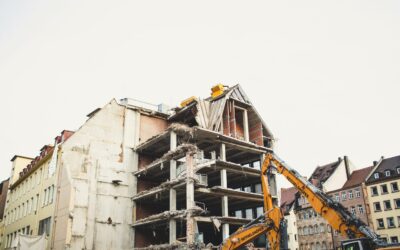
Pre-Demolition Audits: Why Timing Is Everything
The value of a Pre-Demolition Audit has never been about the document itself. It comes from the decisions that the audit allows project teams to make. When teams undertake the audit early, they can identify reuse opportunities, inform demolition strategy, support...
Inspiring Better Choices: In Conversation With Anthony Waterman, Director of ADW Developments
Anthony Waterman is the Director of ADW Developments. With over 25 years in construction economics and sustainability, he leads one of the UK's most respected specialist consultancies, advising on projects worth over £1 billion in construction value every year, and...

World Environment Day: The Biggest Carbon Decisions Happen Before Construction Starts
Every World Environment Day, attention turns to renewable energy, low-carbon materials, and emerging technology. These conversations matter. But from a construction economics perspective, some of the most significant environmental decisions on any project are made...

Elemental vs Whole-Project LCC: Choosing the Right Strategy
Ask three people what Life Cycle Costing (LCC) means and you will often get three different answers. One may describe a high-level cost comparison completed at RIBA Stage 2 to inform structural or façade options. Another may refer to a detailed component-by-component...

BREEAM In Use: The Value of RSC 01 and RSC 03
Most buildings still treat materials as a cost. BREEAM In Use asks a different question: what if those materials still hold long-term value? Within BREEAM In Use, Rsc 01 and Rsc 03 encourage asset owners to think differently about existing buildings. Not simply as...

Post-Occupancy Evaluation: Do You Actually Know How Your Building Is Performing?
Post-Occupancy Evaluation often starts long after the project team has moved on. A building achieves a strong BREEAM rating at post-construction stage. The certificate goes on the wall. Twelve months later, the facilities manager is dealing with complaints about...

Crime Prevention Statement or Security Needs Assessment. What Is the Difference?
If you have worked on any significant development project in recent years, you have likely encountered both of these documents. And you may have wondered whether they are essentially the same thing with different names. The honest answer is: almost, but not quite....

Why Third-Party Verification Under BREEAM V7 Is a Commercial Decision, Not Just a Technical One
For many project teams, third-party verification of Mat 01 under BREEAM Version 7 is seen as a technical requirement. It is often passed to a sustainability consultant and treated as a task to complete. For developers, investors and cost consultants, it means more...

Earth Day: From Net Zero to Regenerative Buildings
What Comes Next? Each Earth Day offers the built environment sector a moment to take stock. To ask not just how far we have come, but whether the direction of travel is still right. Net zero has been the defining ambition of the last decade. It shaped policy, guided...

Why the Future of Construction AI Is Private, Modular, and Built Around Your Data
Artificial intelligence is reshaping the construction and development sector at pace. From early-stage cost planning to tender preparation, the capability on offer today is genuinely useful. As a result, as organisations adopt AI more broadly, they face a deeper...

Material Transparency & Dynamic Material Passports
The built environment is entering a data-driven era where material intelligence is becoming as critical as design and cost. As net zero targets tighten and circular economy principles move into regulation, the focus is shifting beyond how buildings are designed to...

Lifecycle Costing & Carbon: Aligning Financial and Environmental Performance
The transition to net zero is fundamentally reshaping how we evaluate buildings. We no longer judge performance solely at completion; we assess it across decades of operation. Yet financial and carbon decisions are still too often made in isolation, when in reality,...

World Water Day: The Missing Link in Whole Life Carbon and BREEAM Performance
As the built environment accelerates its transition to net zero, operational energy, embodied carbon, and whole life carbon assessments have rightly become central to strategic decision-making. However, one critical performance metric...

Why Energy Procurement Should Be Treated as a Life Cycle Decision
Energy procurement is often treated as a commercial exercise, focused on tariffs, supplier selection, and short-term cost. In a net zero context, that mindset is no longer enough. Energy Procurement and Whole Life Carbon: The Module B6 Connection Within whole life...

Encouraging the Next Generation: Why Girls in Science Matter to the Built Environment
On the International Day of Women and Girls in Science, we celebrate curiosity, innovation, and the power of future talent to shape a better world. For the built environment, this is more than a moment of recognition; it is a reminder that the path to a net zero,...